Umbilical Cord Blood versus Bone Marrow: A Comparative Review of Stem Cell Yield, Biological Properties, and Clinical Utility in Transplantation
Keywords:
Umbilical Cord Blood, Hematopoietic Stem Cells, Bone Marrow, TransplantationAbstract
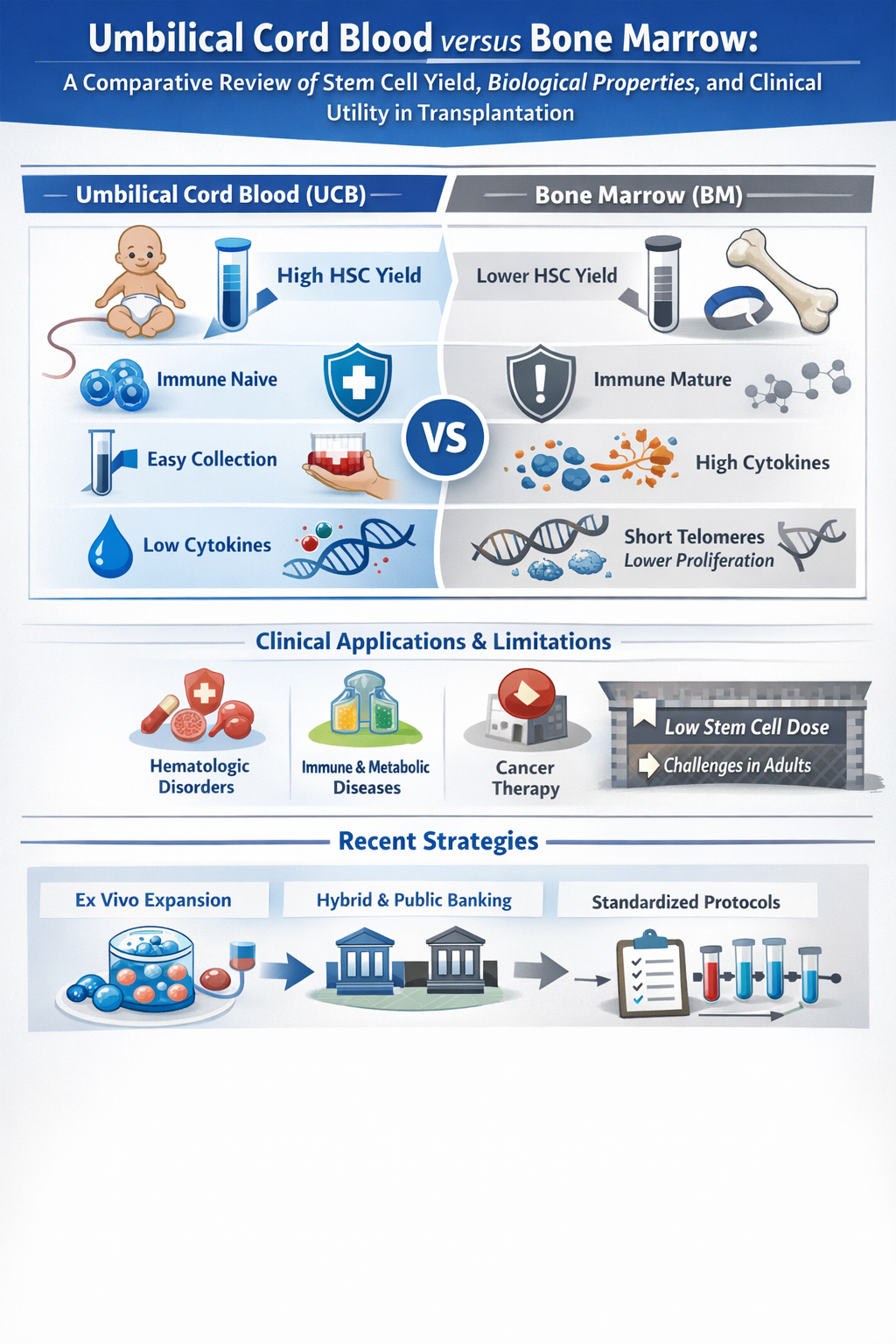
Umbilical cord blood (UCB) has gained increasing recognition as a viable and potentially superior source of hematopoietic stem cells (HSCs) for transplantation. Since the first successful cord blood transplant in 1988, the field has expanded significantly, with over 50,000 UCB transplants done globally. UCB is now being used to treat a variety of hematologic, immunologic, metabolic, and neoplastic disorders. Its unique biological attributes, including immunological naivety, ease of collection, and lower risk of graft-versus-host disease, make it particularly advantageous in both paediatric and adult transplantation settings. Despite these benefits, a major limitation remains the relatively low yield of HSCs in a single unit, which can affect engraftment success, particularly in adults. Compared to bone marrow, UCB contains a higher concentration of primitive stem cells with greater proliferative potential, longer telomeres, and distinct cytokine profiles, but has reduced cytokine production and immune maturity. These differences have critical implications for transplantation outcomes and regenerative applications. This narrative review evaluates umbilical cord blood relative to bone marrow as sources of hematopoietic stem cells, synthesizing biological differences, clinical outcomes, limitations, and recent strategies to enhance UCB utility, such as ex vivo stem cell expansion, hybrid and public banking initiatives, and the standardization of collection and processing protocols.