Knowledge, Attitude, and Perception Towards Sickle Cell Disease Among Residents of Oke-Ose Community, Ilorin, Kwara State
Keywords:
Attitude, Community Awareness, Knowledge, Perception, Sickle Cell DiseaseAbstract
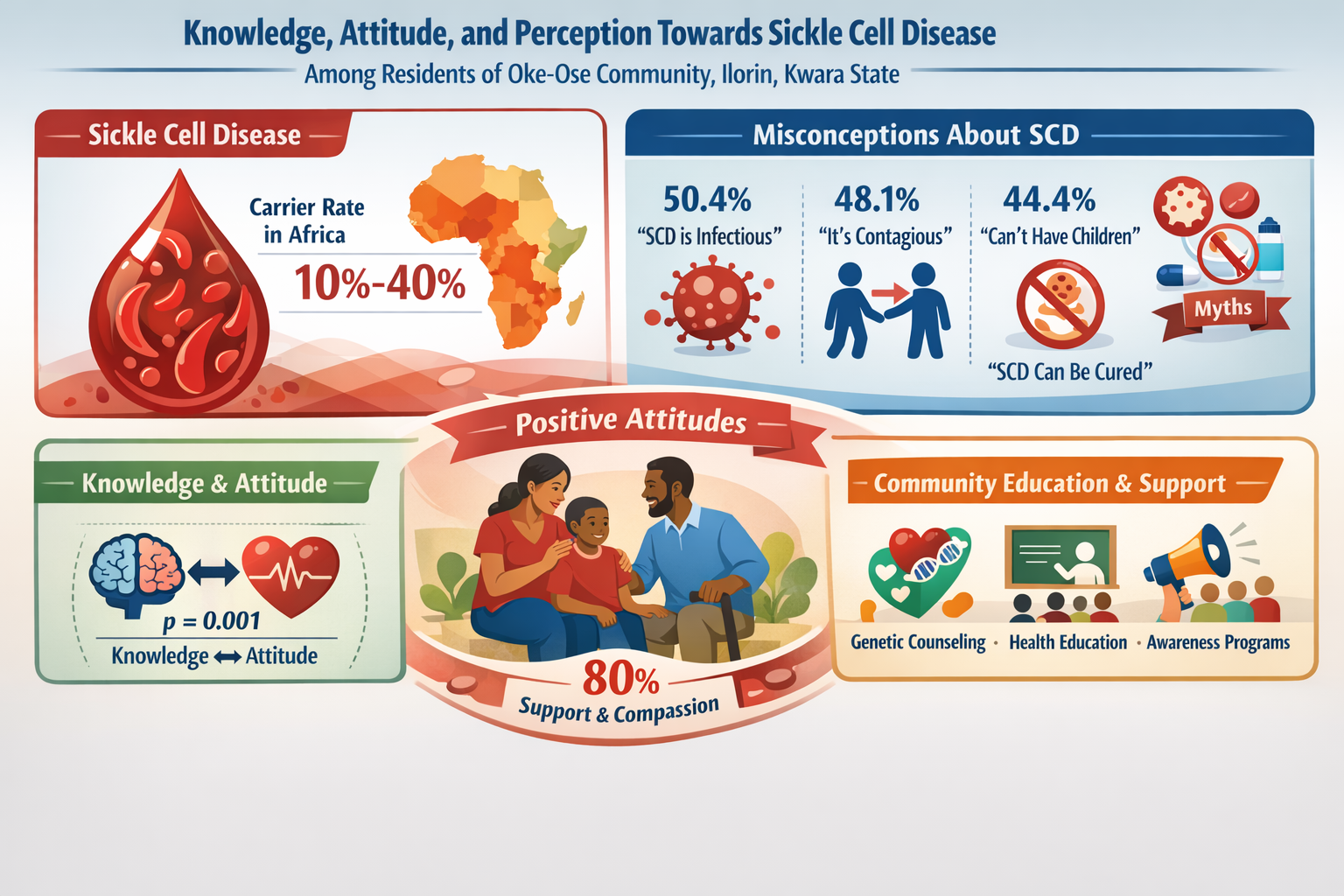
Sickle Cell Disease (SCD) remains one of the most prevalent genetic blood disorders among African populations, with carrier rates ranging from 10% to 40% in some regions. This study assessed the knowledge, attitude, and perception of residents of the Oke Ose community toward sickle cell disease. A descriptive cross-sectional, non-experimental design was employed, and data were collected using a structured questionnaire administered to 421 conveniently selected respondents. The data were analyzed using SPSS version 25 and presented in tables and figures. Most respondents (79.6%) correctly identified SCD as a blood disorder and recognized major symptoms; however, substantial misconceptions persist. Half believed SCD is infectious (50.4%), 48.1% considered it contagious, 44.4% thought affected individuals cannot have children, and over half believed SCD can be cured or cannot be prevented. Despite these misconceptions, attitudes toward individuals living with SCD were largely positive, with over 80% supporting equal treatment and expressing comfort interacting with affected persons. A significant relationship was found between knowledge and attitude (p = 0.001), while educational status showed no association with perception (p = 0.349). These findings highlight persistent knowledge gaps and cultural misconceptions despite generally positive attitudes. Strengthened community education, premarital genetic counseling, and targeted awareness programs are crucial to improving understanding and reducing stigma surrounding SCD in the community.